

Create Your Offer
Brazilian green propolis is a naturally derived substance valued for its rich composition of bioactive plant compounds.* In traditional practices, it has long been used as a natural ingredient in wellness preparations.* Like honey, it has a highly complex composition, with its properties thought to be linked to its content of polyphenols and phenolic acids, including the well-studied artepillin C.*
What is Green Propolis? Where Does it Come From?
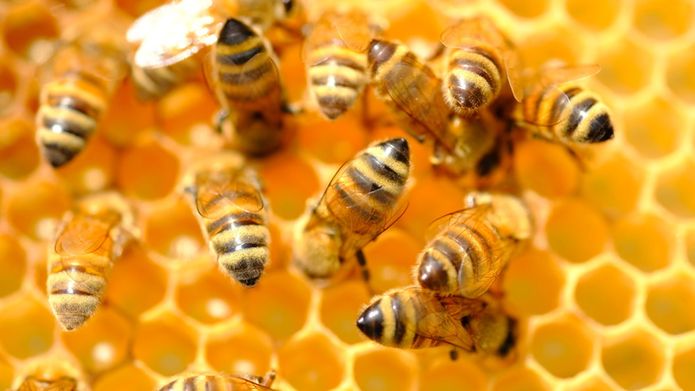
Propolis is a resinous substance produced by bees and used to reinforce and protect the structure of the hive.* It is made from resins collected from tree buds and bark, which bees combine with wax and enzymes.* European propolis is typically derived from poplar or conifer species, while Brazilian green propolis is primarily sourced from Baccharis dracunculifolia.*
The propolis is collected by beekeepers from hive frames and then purified to remove wax and other impurities, resulting in a concentrated natural extract.*
Are Some Forms of Propolis Different From Others?
The composition of propolis varies depending on geographic location, botanical sources, season, and local ecosystems.* These factors influence its profile of naturally occurring plant compounds.*
Brazilian green propolis is characterized by its botanical origin and by its distinctive content of specific polyphenols, including cinnamic acid derivatives, kaempferol, and artepillin C.*
What is Found in Brazilian Green Propolis?
Modern analytical methods have identified more than 300 naturally occurring compounds in propolis, including:*
- Flavonoids, which contribute to antioxidant activity and help protect cells from oxidative stress.*
- Phenolic acids, including caffeic and cinnamic acid derivatives, known for their role in cellular protection.*
- Aromatic compounds such as vanillin and isovanillin.*
- Volatile compounds naturally present in plant resins.*
- Vitamins and minerals occurring in trace amounts, including zinc and silica.*
Brazilian Green Propolis and Wellness Support
Over recent decades, scientific interest has focused on understanding the composition of propolis and its role as a source of antioxidant and plant-derived compounds within dietary supplementation.*
Green Propolis and Immune Support
Research suggests that compounds naturally present in Brazilian green propolis may help support the body’s natural immune defenses and normal immune function.* This activity is thought to be linked to its flavonoid and phenolic content.*
Some studies indicate that propolis-derived compounds may contribute to immune cell activity and antioxidant balance as part of a healthy lifestyle.*
Green Propolis and the Body’s Natural Inflammatory Response
Certain polyphenols found in green propolis have been studied for their role in supporting the body’s normal inflammatory response and cellular balance.* These effects are associated with modulation of oxidative stress rather than direct pharmacological action.*
Green Propolis as a Source of Antioxidants
Brazilian green propolis contains a broad spectrum of antioxidant compounds that help protect cells from oxidative stress, a key factor in cellular aging.* Its flavonoid content places it among naturally antioxidant-rich substances.*
What is Green Propolis Commonly Used For?
As a dietary supplement ingredient, Brazilian green propolis is commonly used to support overall wellness and immune balance.*
- Supporting the body’s natural immune defenses.*
- Helping protect cells from oxidative stress.*
- Contributing to overall wellness during periods of increased environmental stress.*
Why Choose Green Propolis Capsules?
Green propolis is available in various forms, including raw and encapsulated formats.* Capsule formulations offer several practical advantages:*
- They avoid the strong taste naturally associated with raw propolis.*
- Lyophilized extracts help preserve the stability of naturally occurring compounds.*
- Standardized extracts offer consistent composition and quality control.*
With carefully selected botanical sources and standardized extraction, green propolis provides a concentrated source of naturally occurring plant compounds suitable for dietary supplementation.*
Brazilian Green Propolis – Safety Information
Brazilian green propolis is generally well tolerated when used as directed.* As with any dietary supplement, it is advisable to consult a healthcare professional before use, particularly if you have allergies, are taking medication, or have an existing medical condition.*
Discontinue use if any adverse reaction occurs.* Not recommended during pregnancy or breastfeeding unless advised by a healthcare professional.*
WARNINGS
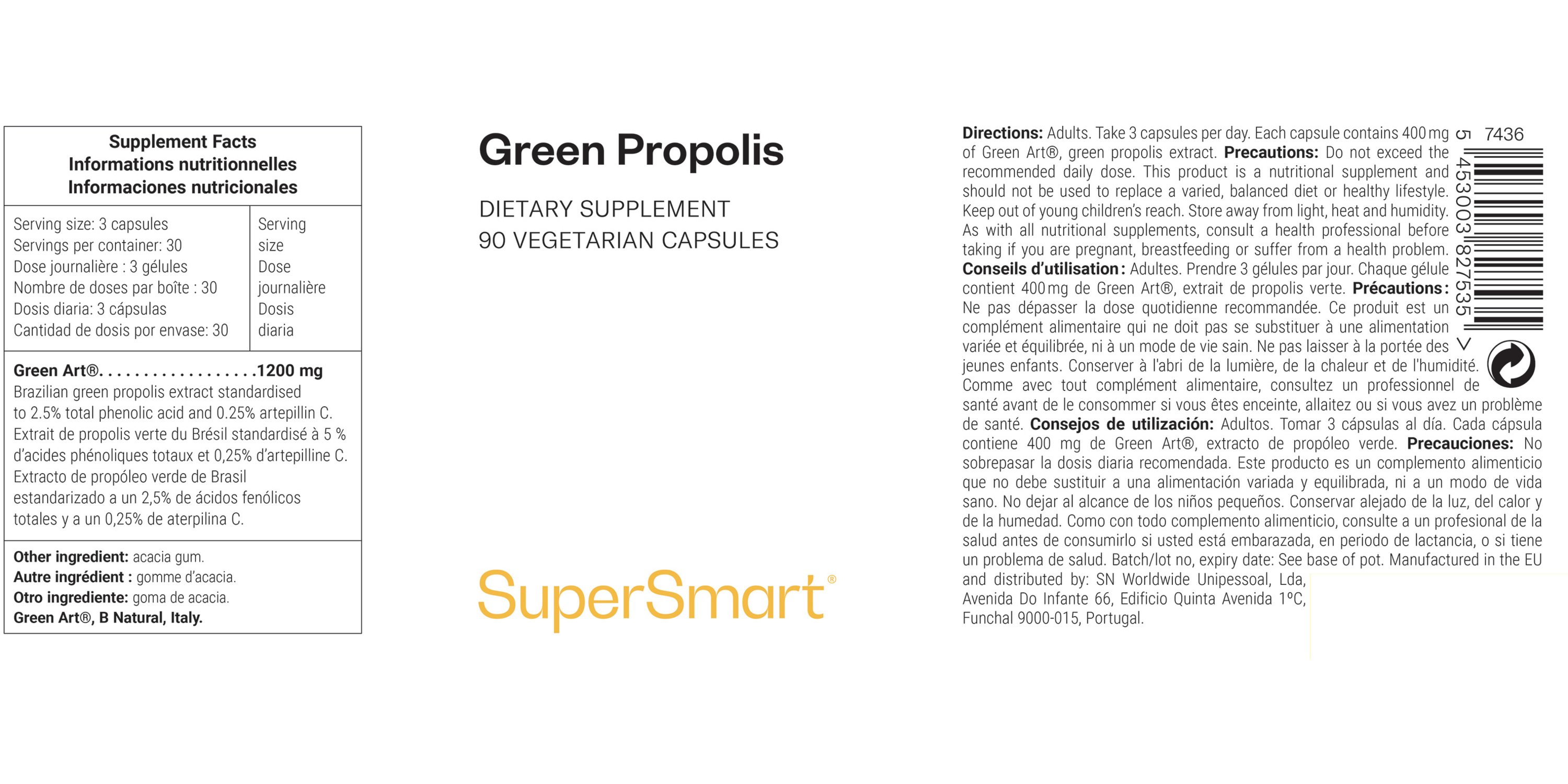
Do not exceed the recommended daily dose. This product is a nutritional supplement and should not be used as a substitute for a varied and balanced diet or a healthy lifestyle.
STORAGE
Store in a cool, dry place away from direct sunlight, heat, and humidity. Keep out of reach of children.
PREGNANCY AND MEDICAL CONDITIONS
If you are pregnant, breastfeeding, or have any medical conditions, consult your healthcare provider before using this product.
SUPPLEMENT INTERACTIONS
Consult your healthcare provider before use, especially if you are taking any medications or other supplements as there may be potential interactions.
Need Help?
Phone Number
+1 (786) 522-3907
From 9 am to 6 pm (EST)
Email Address
You May Also Like